
Roof Repair vs. Full Roof Replacement: How to Know Which One You Actually Need
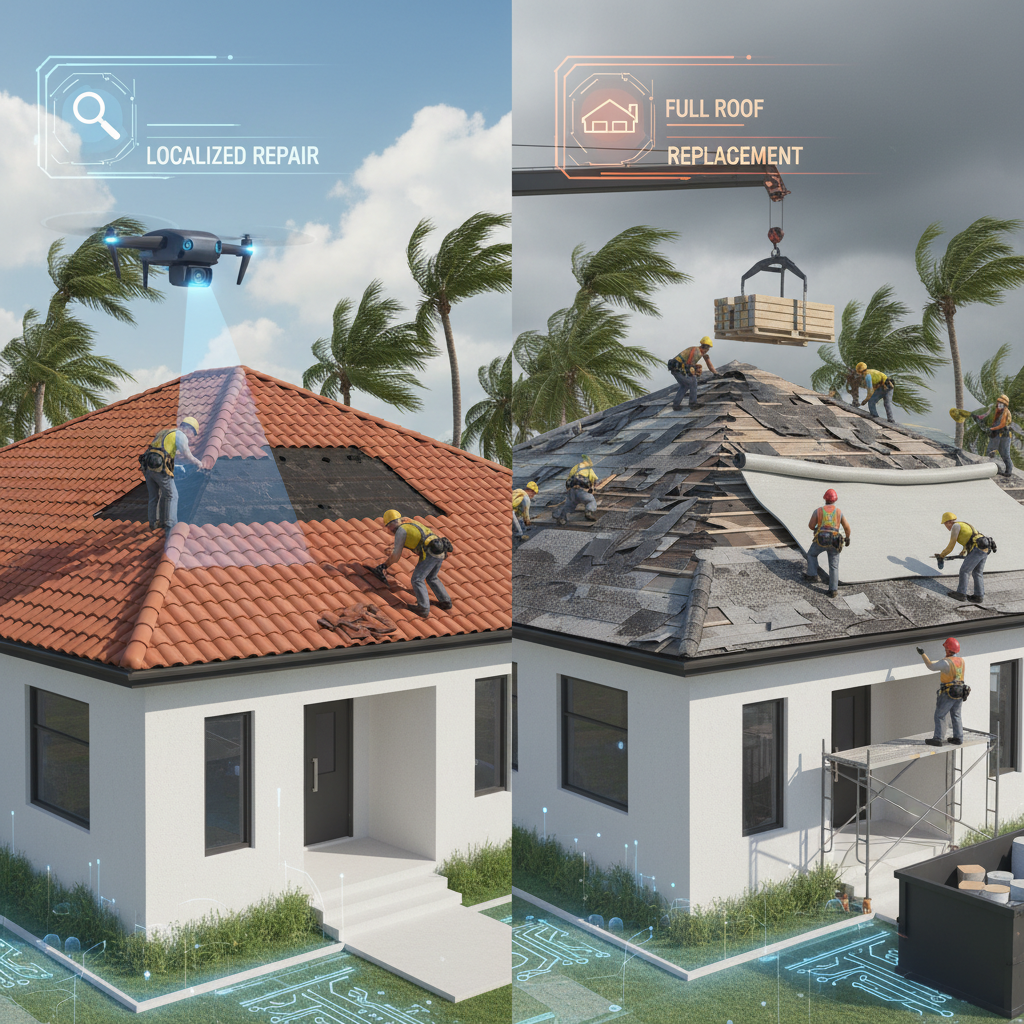
As a homeowner in Florida, you know our roofs take a beating. From relentless sun to sudden, violent hurricanes, your roof is your home's first line of defense. So, when you notice an issue, a critical question pops into your head: do I need a simple repair, or is it time for a complete roof replacement? This isn't just about money; it’s about protecting your family, your property, and your peace of mind.
Here at Krüger Disaster Recovery Team, we've seen it all. We’ve patched countless minor leaks and overseen complete roof rebuilds after devastating storms. The truth is, there's no one-size-fits-all answer, but there are clear indicators that can help you make the right call.
When a Targeted Repair Is the Right Call
Sometimes, a repair is absolutely the most sensible and cost-effective solution. This is usually the case when:
- The Damage is Localized and Minor: If a few shingles blew off in a gust of wind, or you have a small, isolated leak near a vent pipe, a skilled repair can often solve the problem.
- Your Roof is Relatively Young: If your roof is less than, say, 10-15 years old (for asphalt shingles), and the damage isn’t widespread, a repair can extend its life significantly.
- The Rest of Your Roof is in Good Shape: If the damage is confined to one area and the surrounding roofing material shows no signs of significant wear, it often makes sense to repair.
- Budget Constraints Are a Major Factor: While we always recommend investing in the long-term health of your home, sometimes a repair is necessary as a temporary measure while you plan for a future replacement.
However, be wary of continuous patching. If you find yourself calling for repairs every other year, you’re likely throwing good money after bad. It's like putting a band-aid on a gaping wound – it might stop the bleeding temporarily, but it won’t heal the underlying problem.
Clear Signs You Need a Full Roof Replacement
There are certain red flags that strongly suggest a repair won't cut it, and a full replacement is the smarter, more economical choice in the long run. Here’s what we look for:
1. Age of Your Roof
This is often the biggest indicator. Most asphalt shingle roofs are designed to last 20-25 years. Tile roofs can last 50 years or more, and metal roofs even longer. However, Florida’s intense sun, humidity, and frequent storms can significantly shorten these lifespans. If your asphalt shingle roof is approaching or exceeding the 20-year mark, even if it looks okay from the ground, it's probably nearing the end of its functional life. The National Roofing Contractors Association (NRCA) provides general guidelines on material lifespans, but always consider local conditions.
2. Widespread Damage or Deterioration
- Missing or Damaged Shingles: It's one thing to lose a few shingles; it's another if large sections are gone, cracked, or severely curled.
- Granule Loss: If you see a lot of shingle granules in your gutters or on the ground, it means your shingles are losing their protective coating, leaving them vulnerable to UV rays and water.
- Multiple Leaks: If you have leaks popping up in various places, it indicates a systemic failure, not just an isolated problem.
- Sagging Roof Deck: This is a serious structural issue that a repair can't fix. It points to underlying damage to the roof decking or support structure.
3. Visible Water Damage Indoors
If you have widespread water stains on your ceilings or walls, especially in multiple rooms, it's a sign that water is infiltrating your home from various points, making a full replacement more likely to be the necessary solution.
4. Your Neighbors Are Getting New Roofs
This might seem anecdotal, but in Florida, it's often a strong indicator. If a major storm rolled through your neighborhood, even if your roof looks fine to the untrained eye, it might have sustained widespread hail or wind damage that warrants a replacement, and your neighbors might have already filed claims for it.
The Florida Factor: What Our Climate Demands
Living in Florida means dealing with unique challenges:
- Hurricanes and Tropical Storms: These events are a primary driver of roof damage. Even seemingly minor storms can compromise your roof's integrity.
- Intense UV Radiation: The sun's harsh rays accelerate the breakdown of roofing materials, causing them to dry out, crack, and lose granules faster than in other climates.
- High Humidity: Constant moisture can lead to mold, mildew, and rot, especially in poorly ventilated attic spaces or under compromised roofing materials.
- Evolving Building Codes: Florida's building codes are among the strictest in the nation, particularly concerning wind resistance. After major hurricanes, codes are often updated to improve resilience. Replacing an older roof often means upgrading to a system that meets the latest Florida Building Code requirements, which is a significant safety and investment benefit.
Navigating Insurance Claims: Repair vs. Replacement from an Adjuster’s View
When damage occurs, the question of repair vs. replacement often involves your insurance company. Generally, insurance covers sudden, accidental damage (like a hurricane or hail storm), not damage from gradual wear and tear. Your adjuster will assess the extent of the damage:
- If it's localized and can be fixed to restore your roof to its pre-loss condition, they'll likely approve a repair.
- If the damage is widespread, compromises the roof's structural integrity, or if a repair won't bring the roof back to a functional, uniform state, they may approve a full replacement. For example, if your shingles are no longer manufactured, or if replacing a section would create an un-repairable mismatch in color or style on a highly visible part of the roof.
This is where an experienced contractor like Krüger Disaster Recovery Team becomes invaluable. We can provide a detailed, professional assessment to your insurance adjuster, ensuring all damage is identified and documented properly. We understand the nuances of Florida insurance claims and can advocate for the best outcome for your property.
The Krüger Approach: Starting with a Professional Inspection
The very first step you should take is to get a professional, no-obligation roof inspection. Don't try to assess your roof yourself – it's dangerous, and you might miss critical issues that only an experienced eye can spot.
When our team inspects your roof, we don't just look for visible damage. We consider:
- The overall condition and age of your roofing materials.
- The integrity of the underlying deck and structure.
- Any signs of water penetration in your attic.
- Your home's specific vulnerabilities to Florida weather.
We'll then provide you with a transparent, honest assessment of your roof's condition, clearly explaining whether a repair is feasible or if a full replacement is the wiser investment. We'll walk you through your options, discuss materials, and help you understand how to best protect your property.
Making the Right Decision for Your Home
Choosing between a roof repair and a full replacement is a significant decision. It impacts your home's safety, value, and your wallet for years to come. While a repair might seem cheaper upfront, a timely replacement can prevent more extensive and costly problems down the line, especially in Florida’s challenging climate.
Ultimately, the goal is to secure your home with a robust, reliable roof that will stand strong against whatever our Florida weather throws its way. Don't let uncertainty leave your home vulnerable.
If you're unsure about the state of your roof, or if you suspect damage after a recent storm, don't wait for a small problem to become a major headache. Contact Krüger Disaster Recovery Team today for a free, no-obligation roof inspection. Let our experience guide you to the right solution for your home.

Written by
Gus Kruger
CEO at Krüger
Gus Kruger is the founder and CEO of Krüger Disaster Recovery Team, a Florida-based company specializing in emergency property protection, roofing, and fencing. Since 2016, Gus has built the company from a one-man roof tarp operation into a full-service team of 50+ professionals, serving over 30,000 properties across Florida and the Southeast U.S. A preferred vendor for major insurance carriers, BBB A+ rated, and licensed & insured, Gus leads Krüger with a hands-on approach rooted in fast response, honest work, and long-term property solutions.