
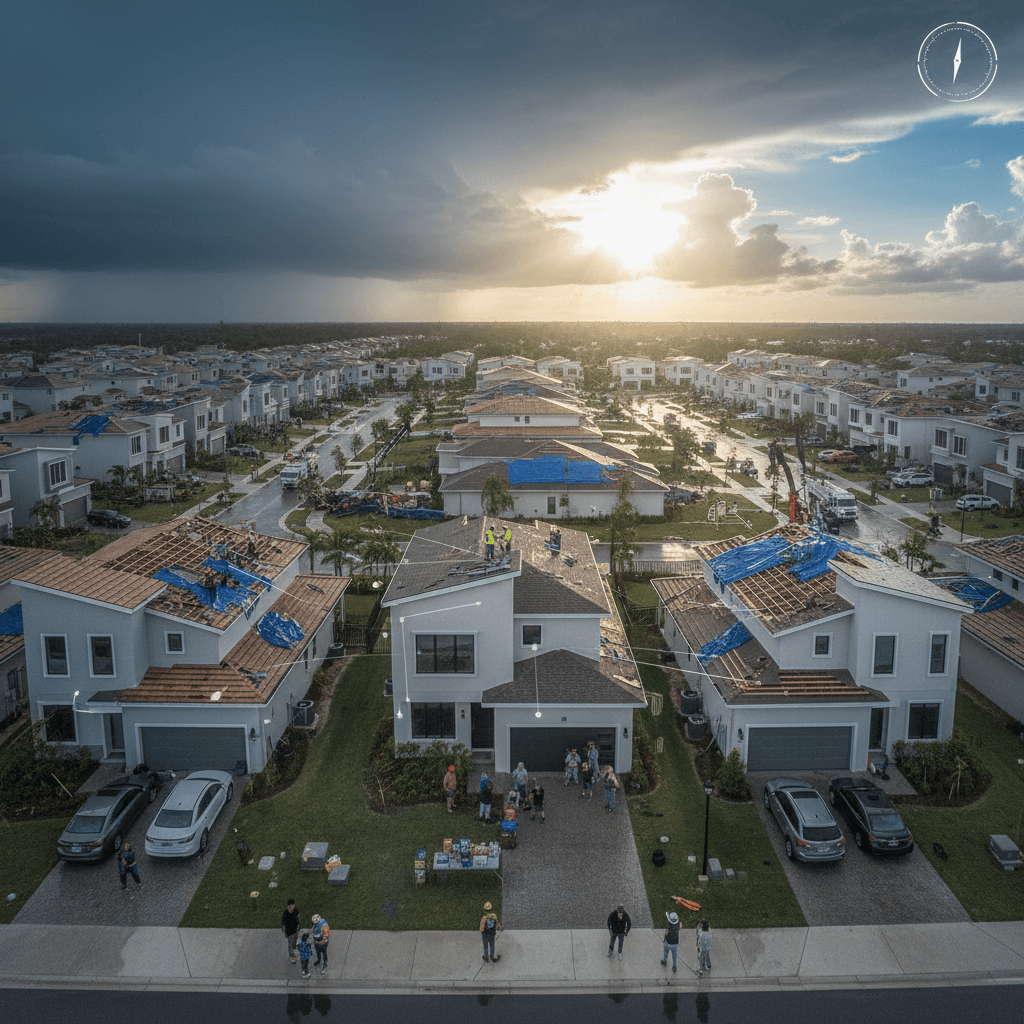
When the Storm Hits Home: Lessons from Illinois for Florida Property Owners
Here at Krüger Disaster Recovery Team, we've been watching the news, just like many of you. Recently, a significant hail event hit parts of Illinois, causing widespread damage and reminding folks up north about the power of Mother Nature. Now, while that's a long way from our sunny shores, it's a stark and important reminder for every property owner down here in Florida: when a storm rolls through, whether it’s hail, heavy wind, or a full-blown hurricane, understanding the damage and knowing your next steps is absolutely critical to protecting your investment.
We live in Florida, and frankly, we know storms. From tropical depressions to Category 5 hurricanes, we've seen it all. But just because we're used to it doesn't mean we should ever be complacent. Every gust of wind, every downpour, every single piece of hail has the potential to cause real, lasting damage to your property. And often, that damage isn't immediately obvious, which is where things can get tricky with insurance.
What Hail and High Winds Really Do to Your Roof
Let's talk about hail first. While we don't get Illinois-style hail regularly, it's not unheard of in Florida. Even small hail can cause significant damage, especially to older or weaker roofing materials. We've seen it hundreds of times: those tiny, often invisible dents on shingles or punctures on soft metals can become major leaks down the line, especially with our constant humidity and heavy rains. Over time, these impact points weaken the shingle's protective granules, exposing the asphalt layer to the sun's UV rays and accelerating its deterioration.
Then there's wind. Ah, Florida wind. Whether it's sustained gusts from a tropical storm or the sheer force of a hurricane, wind is a silent destroyer. It doesn't just rip off shingles; it can lift and loosen them, bend flashing, damage gutters, and even compromise the structural integrity of your roof decking. Wind uplift is a real phenomenon, where negative pressure literally tries to pull your roof off. This is why our Florida Building Code has specific requirements for roof fastening and materials. For example, a properly installed roof needs to withstand significant uplift pressures, and ignoring even minor wind damage can lead to much bigger problems when the next storm comes through. The National Roofing Contractors Association (NRCA) emphasizes that even seemingly minor wind damage can compromise the entire roof system's ability to shed water, leading to costly leaks. You can learn more about roof damage from their resources here: NRCA website.
The Hidden Dangers: Why Immediate Inspection Matters
The biggest challenge we face as property owners after a storm isn't always the visible damage; it's the stuff you can't see from the ground. A minor shingle crack, a barely visible dent in a vent cap, or a loose seal around a skylight might seem insignificant. But add Florida's relentless rain, sunshine, and humidity, and those small issues become major headaches – water intrusion, mold growth, structural rot, and skyrocketing repair costs.
This is why, after any significant weather event, a professional inspection is paramount. We're not just looking for missing shingles; we're meticulously checking for:
- Granule loss: Hail and wind abrasion can strip the protective granules from asphalt shingles, exposing the underlying mat to UV degradation.
- Bruising or fracturing: Impacts can create soft spots or cracks in shingles that might not be visible initially but will fail over time.
- Lifted or missing shingles: Obvious wind damage, but sometimes the lifting is subtle and only visible upon closer inspection.
- Damaged flashing: The metal strips around chimneys, vents, and valleys are critical for water diversion. Any bending or tearing can lead to leaks.
- Compromised gutters: Dents or detachment can prevent proper water drainage, leading to fascia and soffit damage.
- Interior signs: Water spots on ceilings, dampness in attics, or a musty smell are definite red flags.
The longer you wait, the worse the problem gets, and the harder it becomes to connect the damage directly to a specific storm event for your insurance claim.
Navigating the Insurance Claim Maze
This brings us to insurance. After a storm, your insurance policy is your first line of defense, but filing a claim can feel like navigating a maze. Our experience has taught us a few things:
- Document Everything: Before and after photos are your best friends. Take pictures or videos of your property, especially your roof, before hurricane season. After a storm, document any visible damage immediately.
- Contact Your Insurer Promptly: Don't delay. Most policies have specific timelines for filing claims.
- Get a Professional Assessment: Before your insurance adjuster even steps on your property, have a reputable, local storm damage expert like Krüger Disaster Recovery Team conduct a thorough inspection. We understand what adjusters are looking for, what Florida building codes require, and how to properly document damage so your claim has the best chance of approval.
- Understand Your Policy: Know your deductible, what's covered, and what's not. Florida insurance policies can be complex, especially with hurricane deductibles.
We work directly with insurance companies and adjusters all the time. Our goal is to ensure you receive a fair settlement that covers the full cost of necessary repairs, not just a patch-job. According to the Insurance Information Institute, understanding your policy and documenting damage are crucial steps in the claims process (Insurance Information Institute).
Florida's Unique Challenges
Let's not forget where we live. Our building codes are designed to make our homes more resilient to hurricane-force winds. When repairs are needed, they must meet these strict codes. This isn't just about passing inspection; it's about making your home safer and stronger for the next storm. Humidity is another factor; even a small leak can quickly turn into a massive mold problem in our climate, which can have significant health implications and further damage your property.
Protecting your property is an ongoing commitment, especially in Florida. Don't wait until a small issue becomes a catastrophic one. If your property has taken a hit, or even if you just have a nagging doubt after the last big rain, don't hesitate.
Give us a call at Krüger Disaster Recovery Team for a free, no-obligation inspection. We'll give you an honest assessment and help you navigate the path to recovery.

Written by
Gus Kruger
CEO at Krüger
Gus Kruger is the founder and CEO of Krüger Disaster Recovery Team, a Florida-based company specializing in emergency property protection, roofing, and fencing. Since 2016, Gus has built the company from a one-man roof tarp operation into a full-service team of 50+ professionals, serving over 30,000 properties across Florida and the Southeast U.S. A preferred vendor for major insurance carriers, BBB A+ rated, and licensed & insured, Gus leads Krüger with a hands-on approach rooted in fast response, honest work, and long-term property solutions.