
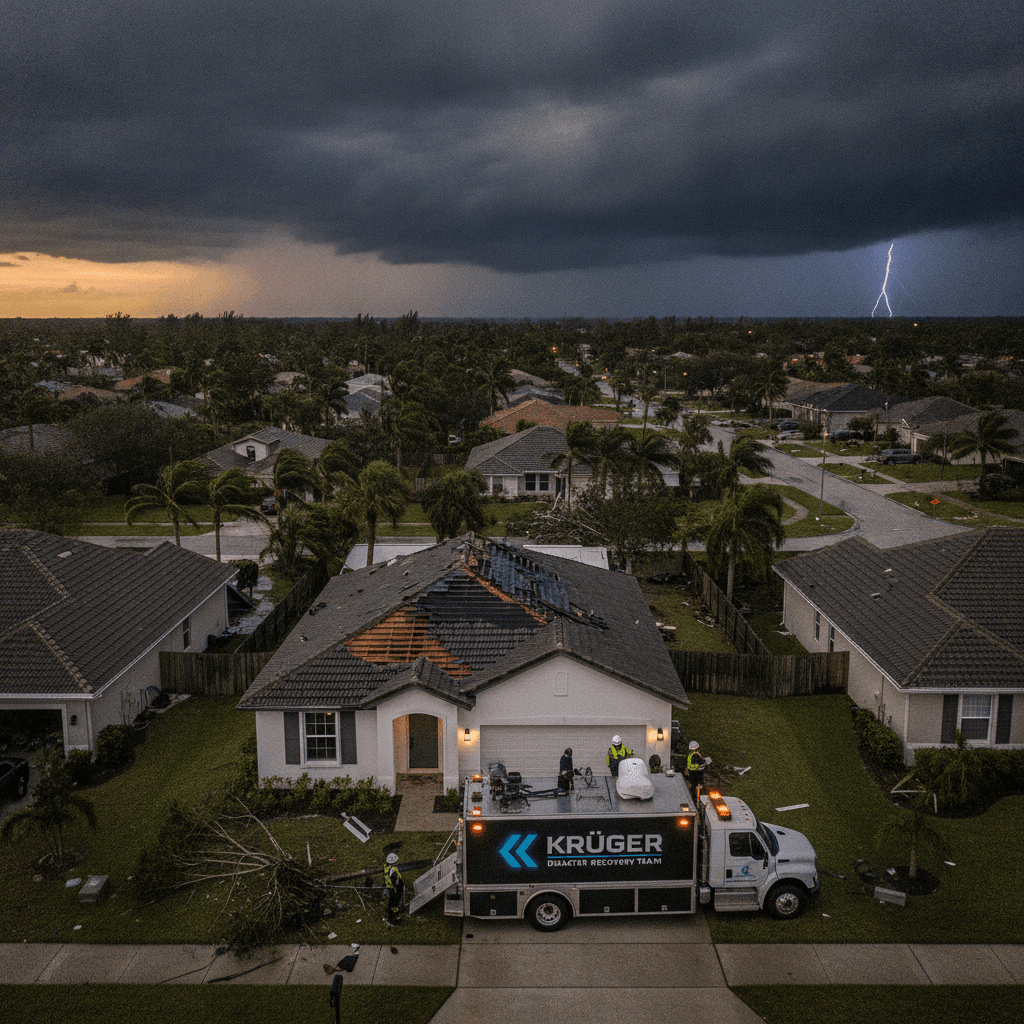
The Cost of Waiting: Why a Damaged Roof is a Ticking Time Bomb in Florida
Here in Florida, we know a thing or two about hurricanes and the havoc they can wreak. Every season, we brace ourselves, and too often, we see the aftermath: trees down, fences gone, and roofs damaged. What many property owners don't realize, though, is that the initial damage is often just the beginning. The real problem starts when those roof repairs get delayed.
We've seen it hundreds of times at Krüger Disaster Recovery Team. A tropical storm tears through, a few shingles are lifted, maybe a small leak appears. Homeowners think, “It's not that bad, I'll get to it.” But in a state like ours, where humidity is a constant companion and another storm is always on the horizon, waiting is the riskiest gamble you can make with your property. As Bay News 9 recently highlighted, homeowners become incredibly vulnerable when that wait for a roof fix lingers.
The Downward Spiral: From a Small Leak to a Major Catastrophe
Let's break down exactly why delaying a roof repair is so dangerous:
- Secondary Damage Galore: That small leak isn't just a drip. It's a gateway for water into your attic, ceiling, walls, and insulation. In Florida's heat and humidity, a little water turns into a big problem fast. We're talking about:
- Mold and Mildew: Within 24-48 hours, mold can start to grow. Not only does this compromise air quality and pose health risks, but it's also incredibly expensive and complex to remediate once it takes hold.
- Structural Rot: Prolonged water exposure can rot wooden trusses, decking, and framing. This weakens the very structure of your home, making it far less resilient to the next high wind event.
- Electrical Hazards: Water and electricity don't mix. Leaks can short out wiring, damage fixtures, and even start fires.
- Compromised Insulation: Wet insulation loses its effectiveness, leading to higher energy bills and creating a perfect breeding ground for mold and pests.
- Exponential Cost Increase: A simple shingle repair or small patch job might cost a few hundred dollars. But add in mold remediation, drywall replacement, structural repairs, and new insulation, and you're looking at thousands, potentially tens of thousands, of dollars. What could have been a minor claim becomes a massive headache and a significant financial burden.
- Insurance Complications: Your insurance policy typically covers sudden and accidental damage. However, if you neglect to repair initial storm damage and subsequent damage occurs because of that neglect (e.g., mold from an ignored leak), your insurer might deny or limit coverage for the secondary damage. They expect you to mitigate further losses. Documentation and timely action are key here.
- Vulnerability to the Next Storm: This is the big one. Florida building codes are designed to make your home withstand hurricane-force winds. A compromised roof, even with minor initial damage, loses its integrity. If another tropical storm or hurricane rolls through, that small weakness can become a catastrophic failure, leading to much more extensive damage – potentially even a full roof collapse or significant water intrusion throughout your entire home.
Navigating the Insurance Maze: Your Best Defense
Dealing with insurance companies can feel like navigating a maze, especially after a storm when everyone is trying to file claims. Here's what we tell our clients:
- Document Everything: As soon as it's safe, take photos and videos of all damage – inside and out. Date them. This visual evidence is crucial.
- Contact Your Insurer Promptly: Don't delay filing your claim. The sooner you report, the sooner the process can begin.
- Understand Your Policy: Know what your deductible is, what's covered, and any specific requirements for repairs or replacements. Don't be afraid to ask your agent questions.
- Get a Professional Assessment: Before you even speak to an adjuster, it's wise to get an independent assessment from a reputable, licensed contractor. We often find damage homeowners miss. This gives you an informed starting point for discussions with your insurance company.
- Be Patient, But Persistent: The claims process can take time. Follow up regularly, keep detailed records of all communications, and don't hesitate to seek professional help if you feel your claim isn't being handled fairly.
Why Krüger Disaster Recovery Team Recommends Immediate Action
Our team lives and works in Florida, and we've seen firsthand what happens when property owners delay. We understand the urgency, and we're built to respond quickly. From emergency tarping to comprehensive roof replacements that meet or exceed Florida's robust building codes, our goal is to protect your property and investment.
Ignoring roof damage doesn't make it go away; it just gives it time to get worse. In Florida, where a blue sky can turn into a tempest in a matter of hours, you simply can't afford to wait. Get ahead of the next storm, protect your investment, and ensure your home remains the safe haven it's meant to be.
If your roof has suffered damage, no matter how minor it seems, don't let the wait turn into a disaster. Call us today for a free, no-obligation inspection and let us help you understand your options and secure your home's future.

Written by
Gus Kruger
CEO at Krüger
Gus Kruger is the founder and CEO of Krüger Disaster Recovery Team, a Florida-based company specializing in emergency property protection, roofing, and fencing. Since 2016, Gus has built the company from a one-man roof tarp operation into a full-service team of 50+ professionals, serving over 30,000 properties across Florida and the Southeast U.S. A preferred vendor for major insurance carriers, BBB A+ rated, and licensed & insured, Gus leads Krüger with a hands-on approach rooted in fast response, honest work, and long-term property solutions.