
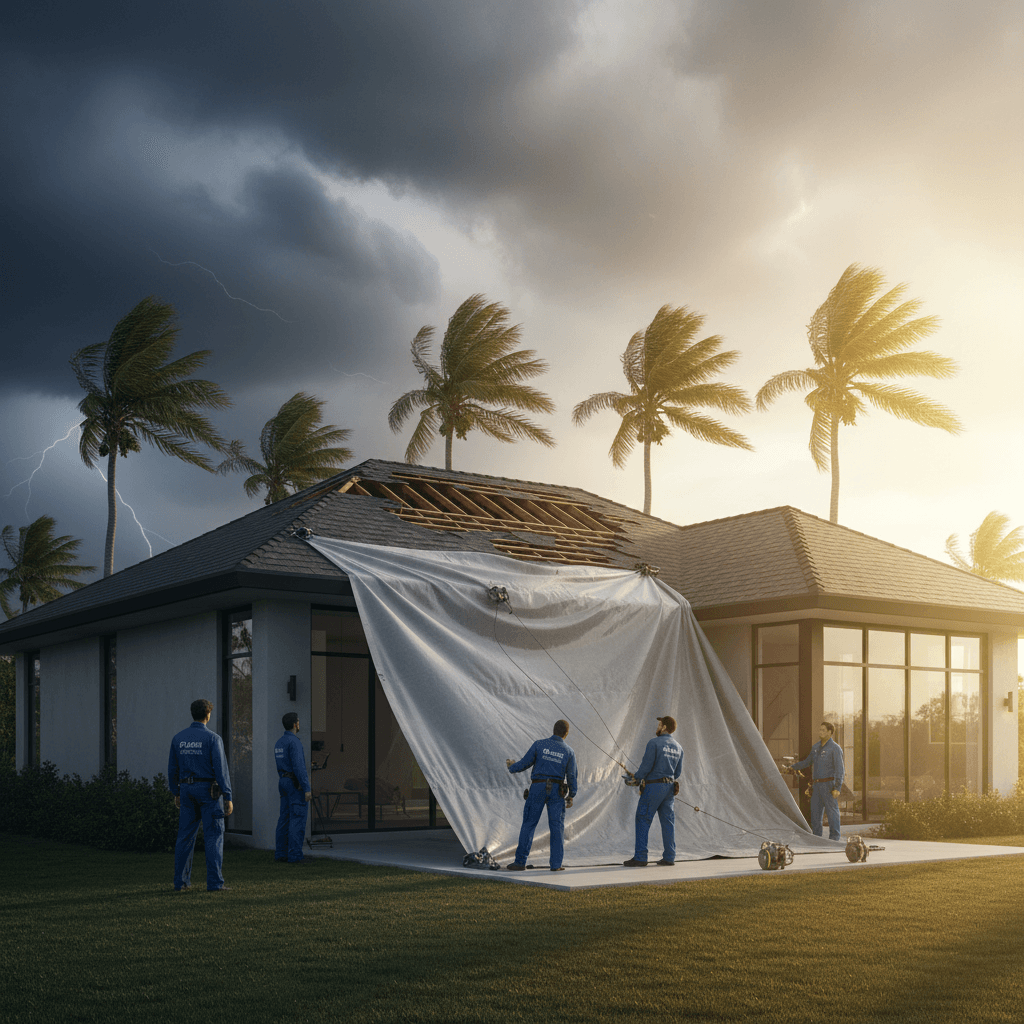
When the Storm Hits: Protecting Your Florida Home
Alright, folks. Gus Kruger here. You know, living in Florida, it's not a matter of 'if' a storm hits, but 'when.' And when those winds kick up and the rain starts coming down sideways, your roof is the first line of defense for your biggest investment – your home. We've seen it hundreds of times here at Krüger Disaster Recovery Team: a little leak turns into a big problem, fast, especially after a hurricane or a severe tropical storm. That's why understanding emergency roof repairs isn't just good knowledge; it's essential for every Florida homeowner.
When a storm rolls through, it leaves a mess, and often, that mess includes damage to your roof. You might see missing shingles, torn flashing, or even a tree limb straight through your attic. The immediate aftermath can be overwhelming, but panicking isn't going to fix anything. What will, though, is taking swift, smart action. Delaying even a few hours can turn minor damage into a major headache, leading to water intrusion, mold, and structural issues that cost a fortune down the line. We're talking about protecting your entire property here.
Immediate Steps After a Storm: Act Fast, Act Smart
So, what do you do the moment you suspect your roof has been compromised?
- Safety is Paramount: First off, don't go climbing on a damaged roof yourself, especially if there are downed power lines or active storm conditions. Leave that to the pros with the right safety gear and training.
- Document Everything: Once it's safe to venture outside, grab your phone and take clear photos and videos of all visible damage. Get close-ups and wider shots that show the context. This documentation is your best friend when you deal with your insurance company later. Trust me, it makes the claims process a whole lot smoother.
- Prevent Further Damage (Temporary Measures): This is where temporary measures, like tarping, come in. A good, professionally installed tarp can be the difference between a minor repair and needing a complete roof replacement. We've got crews ready to get up there and secure your roof, preventing more water from getting in. This isn't a long-term fix, mind you, but it buys you crucial time. We often get calls where folks tried to DIY a tarp, and it just blew off in the next gust. Improper tarping can cause more damage or injury, so don't take chances.
- Call the Experts: Once your property is secured, it's time to call in the experts. Don't wait. We'll get out there for a thorough inspection, identify all the damage – even the stuff you can't see from the ground – and help you understand your options. Remember, Florida's humidity means water damage can quickly lead to mold, turning a roof issue into an indoor air quality nightmare. Quick action is key.
Understanding Common Roof Damage in Florida
Understanding the kind of damage your roof sustains in Florida storms is crucial. It's not always just missing shingles. Wind damage can lift and crease shingles, even if they don't blow off entirely, compromising their seal. Hail, while less common than wind here, can cause bruising on shingles that might not be visible immediately but weakens their protective layer. And then there's water intrusion, which can manifest as leaks in your attic or ceiling, indicating a breach in your roof's integrity, often around flashing, vents, or valleys. We've seen it all, from minor shingle repair needs to complete roof structural failures after a direct hit from a Category 4 or 5.
Navigating Insurance Claims with Confidence
Dealing with insurance companies can feel like navigating a maze, but it doesn't have to be. Your first step after documenting and securing your property is to file a claim promptly. Most policies have time limits for reporting damage. Don't drag your feet. Understand your policy – know your deductible and what coverage you have for wind, hail, and water damage.
When the insurance adjuster comes out, remember they represent the insurance company. While most are fair, their primary goal is to assess the damage for their employer. This is where having your own trusted contractor's assessment comes in. We can walk the roof with the adjuster, point out damage they might miss, and ensure nothing is overlooked. A comprehensive estimate from a local, reputable company like ours can be invaluable in getting a fair settlement. The Florida Office of Insurance Regulation offers great resources for homeowners navigating claims, which I always recommend checking out.
Choosing the Right Contractor for Your Emergency Repairs
Choosing the right contractor after a storm is arguably one of the most important decisions you'll make. This is Florida; we get 'storm chasers' who blow in after a big hurricane, do quick, shoddy work, and then disappear when you have problems. Don't fall for that.
Always ensure your contractor is fully licensed and insured in the state of Florida. You can verify their license through the Florida Department of Business and Professional Regulation. A contractor with local experience understands Florida's unique building codes, which are some of the toughest in the nation for good reason, thanks to our hurricane activity. They'll know about required wind mitigation techniques, specific nailing patterns for high winds, and the best materials for our climate. Ask for references, check online reviews, and look for a company with a strong reputation in the community. That's how we've built our business, one happy customer at a time.
Florida Building Codes: Your Roof's Best Defense
Speaking of Florida building codes, they're not just suggestions; they're vital for your safety and property value. After devastating hurricanes like Andrew in '92, and later Charley, Irma, and Ian, our codes have evolved significantly to make homes more resilient. When we do a repair or replacement, we're not just fixing what's broken; we're upgrading your roof to meet or exceed current Florida Building Code standards. This often includes things like secondary water barriers, stronger decking attachment, and higher-rated roofing materials designed to withstand hurricane-force winds. Investing in these upgrades can actually lead to lower insurance premiums in some cases, so it's a win-win.
Long-Term Peace of Mind: Beyond the Emergency
Long-term, thinking about your roof's health before a storm hits is always better than reacting after. Regular maintenance – cleaning gutters, trimming overhanging branches, getting routine inspections – can identify small issues before they become big ones. And if your roof is getting old, consider a proactive replacement with high-quality, wind-resistant materials. It's an investment that pays off in peace of mind when the next tropical depression starts brewing in the Atlantic.
Don't Wait, Act Now
Look, nobody wants to deal with roof damage, but in Florida, it's a reality we prepare for. Knowing these steps can empower you to protect your home and your investment. Don't let a storm leave you stranded. If you suspect your roof has been damaged, or even if you just want some peace of mind before hurricane season kicks into high gear, give us a call at Krüger Disaster Recovery Team. We offer free, no-obligation roof inspections, and we're here to help you get back on your feet quickly and correctly.

Written by
Gus Kruger
CEO at Krüger
Gus Kruger is the founder and CEO of Krüger Disaster Recovery Team, a Florida-based company specializing in emergency property protection, roofing, and fencing. Since 2016, Gus has built the company from a one-man roof tarp operation into a full-service team of 50+ professionals, serving over 30,000 properties across Florida and the Southeast U.S. A preferred vendor for major insurance carriers, BBB A+ rated, and licensed & insured, Gus leads Krüger with a hands-on approach rooted in fast response, honest work, and long-term property solutions.