
Protecting Your Property: Why Wind Mitigation is Key for Tampa Bay Homeowners
Down here in Florida, especially in Tampa Bay, we live with a beautiful coastline and vibrant communities. But that beauty comes with a serious neighbor: hurricane season. Every year, as the summer months roll in, the conversation inevitably turns to storm preparedness. I've been in this business a long time, and we've seen firsthand what a strong storm can do to a home. It's why topics like wind mitigation, similar to what local news outlets like The Norfolk Daily News are reporting, are so critical for homeowners.
Wind mitigation isn't some fancy, complicated construction term; it's simply a set of features and improvements that reduce the damage a strong wind can inflict on your home. Think of it as giving your house a superhero suit for hurricane season. In Florida, with our specific building codes and the sheer power of tropical storms and hurricanes, these aren't just good ideas—they're essential investments.
Why Every Tampa Bay Homeowner Needs to Think About Wind Mitigation
Beyond the obvious benefit of protecting your family and your belongings, there are two massive reasons to prioritize wind mitigation:
- Property Preservation: A roof is more than just shingles; it's the primary shield for your entire home. When a roof fails during a storm, water intrusion is almost guaranteed, leading to widespread interior damage, mold, and costly structural repairs. We've seen homes completely devastated because a few key structural elements weren't up to par.
- Insurance Savings: This is huge in Florida. The state actively incentivizes homeowners to make their properties more resistant to wind damage. By having a qualified inspector verify your home's wind-resistant features, you can qualify for significant discounts on your windstorm insurance premiums. These savings can add up to hundreds, even thousands, of dollars each year, making the initial investment in upgrades pay for itself over time. The Florida Office of Insurance Regulation provides specific guidelines and forms, like the Uniform Mitigation Verification Inspection Form (OIR-B1-1802), that outline what qualifies for these discounts.
Key Wind Mitigation Strategies for Your Roof
When we talk about strengthening a roof against the wind, we're looking at several critical areas. These are the points where wind often finds a weakness to exploit:
1. Roof Deck Attachment
This is about how your roof's plywood or oriented strand board (OSB) decking is secured to the rafters or trusses. Older homes might have staples or smaller nails spaced too far apart. Modern building codes, especially the Florida Building Code, require stronger fasteners (like 8d ring-shank nails) spaced more closely to prevent the deck from lifting off in high winds. If your roof deck isn't properly attached, even the best shingles won't hold if the base gives way.
2. Roof-to-Wall Attachment
Imagine your roof as a hat on your house. How well is that hat tied down? This refers to how securely your roof trusses or rafters are connected to the exterior walls. Common attachments include:
- Toe Nailing: Older, weaker method.
- Clips: Metal clips connecting the roof to the wall.
- Single Straps: Metal straps over the truss/rafter, secured to the wall.
- Double Straps: Even stronger, with two straps.
Stronger attachments mean your roof is less likely to separate from the house during extreme winds. We often see homes with weak roof-to-wall connections suffer the most catastrophic damage during a hurricane.
3. Secondary Water Barrier (SWB)
Even if your shingles blow off, you don't want water pouring into your attic. A secondary water barrier, typically a self-adhering modified bitumen underlayment, is installed directly to the roof deck beneath your primary roofing material. This acts as a last line of defense against water intrusion. It's a huge factor in preventing widespread interior damage and mold growth. Many newer roofs in Florida include this as standard, but older roofs often don't have this crucial protection.
4. Roof Shape
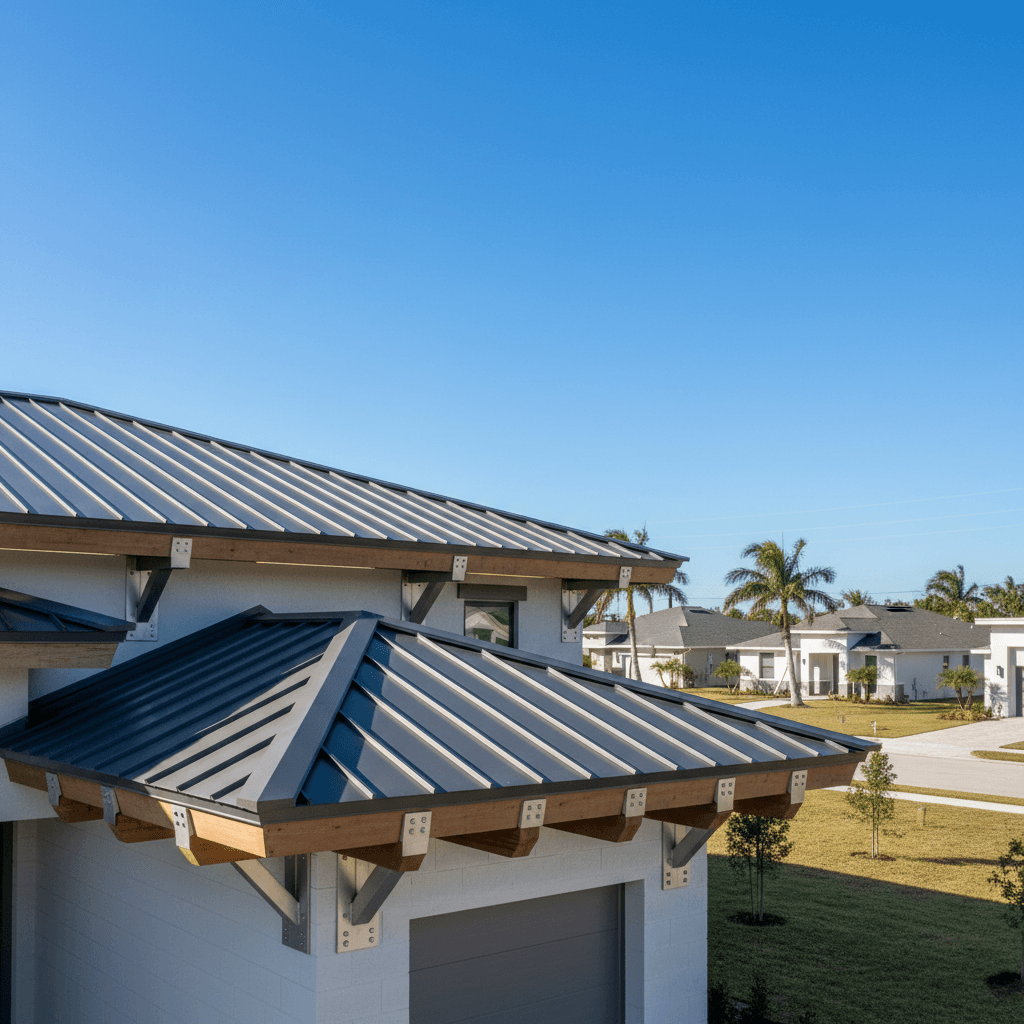
While not an upgrade you can easily make, the shape of your roof plays a role. Hip roofs (which slope on all four sides) generally perform better in high winds than gable roofs (which have two flat sides and two sloping sides) because they offer less surface area for the wind to catch. If you're building new or doing a major reroof, this is a consideration, but for existing homes, focusing on the other mitigation factors is more practical.
5. Opening Protection
While primarily focused on the roof, it's worth mentioning that protecting all openings – windows, doors, and especially garage doors – is vital. If a window or door blows in, the sudden change in air pressure inside your home can create immense uplift forces on your roof, literally trying to rip it off from the inside. FEMA's guidance on protecting openings emphasizes this internal pressure factor.
The Insurance Angle: How a Wind Mitigation Inspection Works
Getting a professional wind mitigation inspection is your golden ticket to those insurance savings. A certified inspector will come to your home, assess all these features, and fill out that official OIR-B1-1802 form. This form documents your home's resistance to wind damage, from the roof shape and construction year to the specific fasteners and attachments used. We've helped countless homeowners navigate this process, ensuring they get the proper documentation to submit to their insurance company.
The better your home performs on this inspection, the higher your discounts will likely be. It's a direct reward for being proactive and investing in your property's resilience. For homes built after 2001, you're usually in pretty good shape due to stricter Florida Building Codes implemented after Hurricane Andrew. But even older homes can often be upgraded to qualify for significant savings.
Our Experience: What We See and What You Can Do
As the Krüger Disaster Recovery Team, we've walked through hundreds of storm-damaged homes across Florida. The difference between a home with good wind mitigation and one without is stark. A strong roof often means the difference between minor repairs and a total loss.
Before hurricane season truly ramps up, take the time to inspect your roof visually. Look for loose or missing shingles, deteriorated flashing around vents or chimneys, and any signs of wear. Better yet, get a professional inspection. We can identify potential weak points you might not see and advise you on the most cost-effective upgrades to improve your home's wind resistance.
Don't wait until a storm is bearing down on Tampa Bay to think about your roof. Proactive steps now can save you a world of headache, stress, and money later. Empower yourself with knowledge and prepare your property. It's the smart move for any Florida homeowner.
Ready to ensure your roof is ready for whatever hurricane season throws its way? Give us a call at Krüger Disaster Recovery Team for a free, no-obligation roof inspection. We'll help you understand your home's current wind resistance and provide a clear path to strengthening your property.

Written by
Gus Kruger
CEO at Krüger
Gus Kruger is the founder and CEO of Krüger Disaster Recovery Team, a Florida-based company specializing in emergency property protection, roofing, and fencing. Since 2016, Gus has built the company from a one-man roof tarp operation into a full-service team of 50+ professionals, serving over 30,000 properties across Florida and the Southeast U.S. A preferred vendor for major insurance carriers, BBB A+ rated, and licensed & insured, Gus leads Krüger with a hands-on approach rooted in fast response, honest work, and long-term property solutions.