
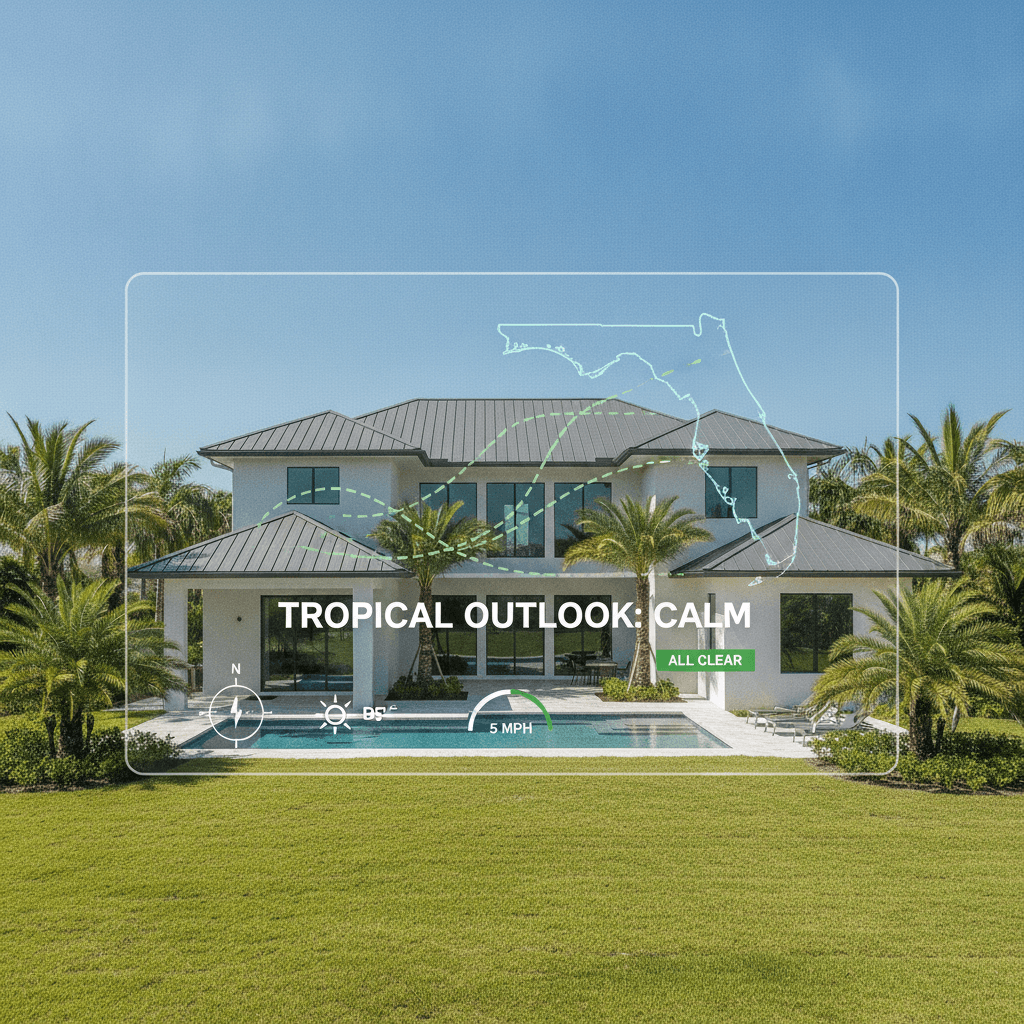
A Brief Respite from the Storm: What a Quiet Outlook Means for Florida Homeowners
Here in Florida, we live and breathe hurricane season. From June 1st to November 30th, it’s always on our minds. So, when the National Hurricane Center (NHC) issues an outlook like the one we just saw – "Tropical cyclone formation is not expected during the next 7 days" – it can feel like a welcome sigh of relief. And it is! Forecaster Pasch's report is good news for the North Atlantic, Caribbean Sea, and Gulf of America. But for us at Krüger Disaster Recovery Team, we see these quiet periods not just as a break, but as a crucial opportunity.
You see, I’ve been in this business for decades. Started on the rooftops myself, learned every nail, every shingle, every leak. And what I've learned is that the time to prepare isn't when the wind is howling, but when the sun is shining. These stretches of calm weather are golden for proactive property owners. They're your chance to strengthen your defenses, review your plans, and make sure you're not caught off guard when the next system inevitably brews.
Don't Get Complacent: Use This Time Wisely
We've seen it hundreds of times: a quiet spell turns into a rapid intensification. Florida's weather can be unpredictable, and tropical systems can develop quickly. Just because there's nothing on the horizon today doesn't mean you can put off hurricane preparedness until later. Later might be too late. Here’s what my experience tells me you should be doing right now:
1. Inspect Your Roof – Your First Line of Defense
Your roof is the most vulnerable part of your home during a storm. Even if you haven’t had a direct hit recently, years of intense sun, tropical downpours, and even minor gusty winds can take their toll. High humidity, a constant companion in Florida, also contributes to wear and tear. This is the perfect time for a thorough inspection. Look for:
- Missing or damaged shingles: Even one missing shingle can be a gateway for water.
- Granule loss: If you see a lot of grit in your gutters, your shingles are deteriorating.
- Loose flashing: Around chimneys, skylights, and vents, this is a common leak point.
- Clogged gutters: These can lead to water pooling and damaging fascia and soffit, or overflowing and eroding your foundation.
- Tree branches: Trim anything overhanging your roof that could become a projectile.
We offer free inspections because we know how vital this is. Catching a small issue now can prevent catastrophic damage later. We adhere strictly to Florida Building Code standards, ensuring any repairs are robust enough to withstand our unique climate.
2. Review Your Insurance Policy
This is probably the least exciting task, but it's one of the most important. Don't wait until after a storm to understand your coverage. Pull out your homeowner's insurance policy and really read it. Pay close attention to:
- Deductibles: Especially your hurricane deductible, which is often a percentage of your home's insured value, not a flat dollar amount.
- Coverage limits: Is your home insured for its full replacement cost? Does it cover ordinance and law if you need to rebuild to new codes?
- Flood insurance: Standard homeowner's insurance does NOT cover flood damage. If you're in a flood-prone area (and let's be honest, much of Florida is), you need a separate policy from the National Flood Insurance Program (NFIP).
- Contents coverage: Is your personal property adequately protected?
If anything is unclear, call your agent. We’ve worked with countless adjusters and know that understanding your policy beforehand makes the claims process smoother. Having a clear grasp of your policy helps immensely if you ever need to file a claim with the Florida Office of Insurance Regulation.
3. Document Your Property
Before any storm hits, take a detailed photo and video inventory of your home, both inside and out. Focus on high-value items, unique features, and the general condition of your roof, walls, and landscaping. Store these documents in a secure, off-site location (like cloud storage). This documentation is invaluable evidence if you ever need to file an insurance claim, providing a clear 'before' picture to compare against any 'after' damage.
4. Fine-Tune Your Emergency Plan
Even with a quiet outlook, your family's emergency plan should always be current. We recommend reviewing the resources from FloridaDisaster.org or Ready.gov from FEMA. This includes:
- Go-bag essentials: Water, non-perishable food, first-aid kit, medicines, important documents, battery-powered radio, chargers.
- Communication plan: How will your family connect if cell service is down?
- Evacuation routes: Know your zone and multiple ways out.
- Shelter options: Local shelters, hotels, or friends/family outside the impact zone.
5. Keep an Eye on the Forecast
Even though the NHC's 7-day outlook is clear, the Atlantic hurricane season is long. Keep monitoring reputable sources like the NHC for daily updates. Conditions can change rapidly. What's clear today might not be tomorrow.
Your Trusted Partner for Peace of Mind
At Krüger Disaster Recovery Team, our business is built on trust and results. We don't just fix roofs; we help you navigate the entire recovery process. From meticulous inspections to guiding you through complex insurance claims, we're here to ensure your property is restored properly and your investment is protected. We understand Florida's unique challenges and are committed to helping our neighbors build stronger, safer homes.
Don't let a calm forecast lull you into a false sense of security. Use this valuable time to prepare. When it comes to protecting your home, proactive steps today prevent headaches and significant damage tomorrow. If you have any questions about your roof's condition or want an expert eye on your property, don't hesitate to reach out. We're always here to help.

Written by
Gus Kruger
CEO at Krüger
Gus Kruger is the founder and CEO of Krüger Disaster Recovery Team, a Florida-based company specializing in emergency property protection, roofing, and fencing. Since 2016, Gus has built the company from a one-man roof tarp operation into a full-service team of 50+ professionals, serving over 30,000 properties across Florida and the Southeast U.S. A preferred vendor for major insurance carriers, BBB A+ rated, and licensed & insured, Gus leads Krüger with a hands-on approach rooted in fast response, honest work, and long-term property solutions.